
Simulating Surf Breaks in Unity: Developer FinSaltSwell’s approach.
by Vicente C.
Published |
1,102
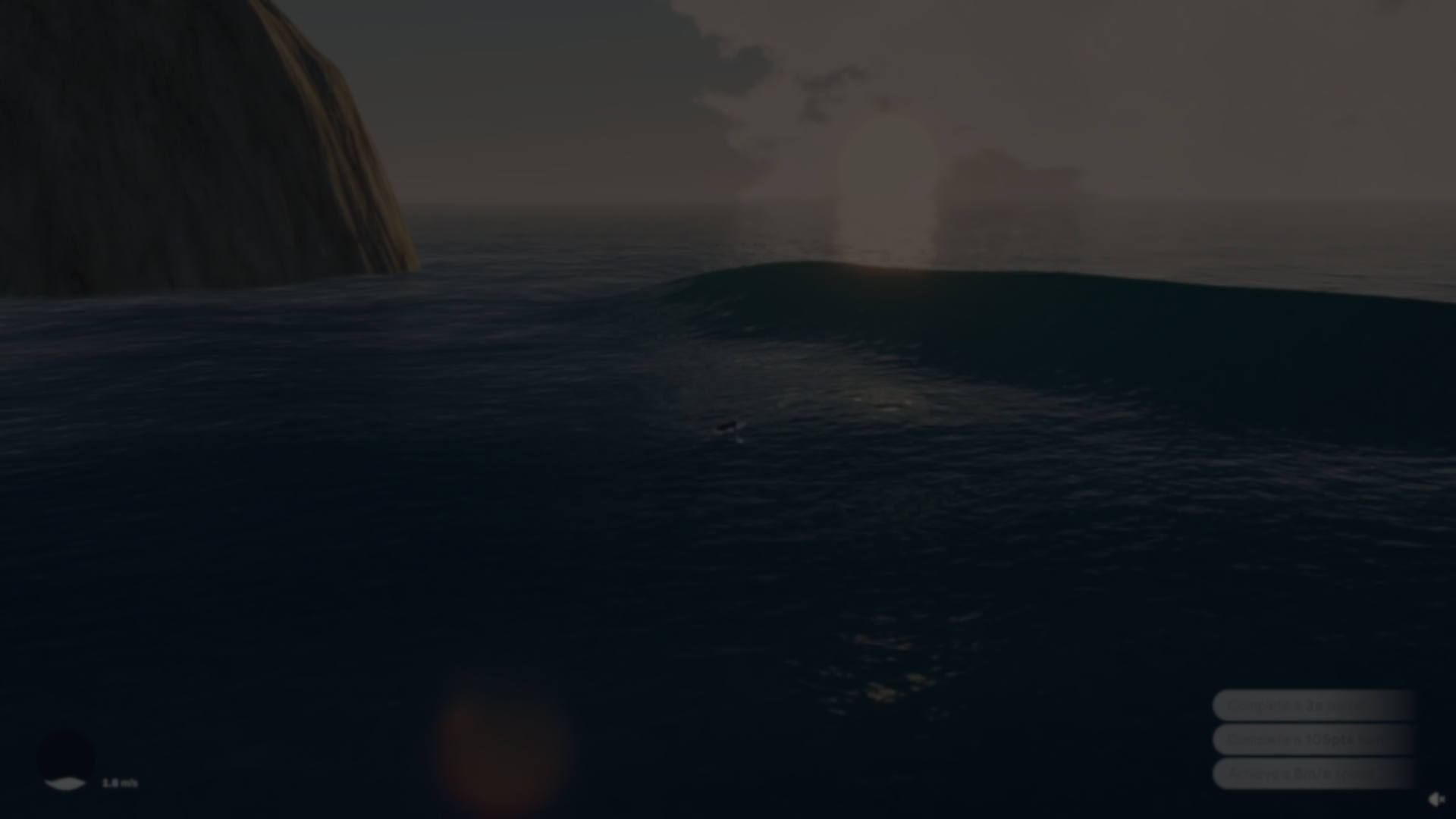
I came across a post a few days ago from a developer going by FinSaltSwell. The post showed an early build of a surfing game he’s been working on for about a year, built in Unity as a solo project.
The goal behind the project, currently codenamed “Swell,” is fairly simple: create a surfing experience that behaves closer to the real sport. Instead of focusing on exaggerated tricks and endless perfect waves often seen in arcade-style surfing games, the project explores things like wave positioning, carving along the face of a wave, and navigating sections that don’t always break perfectly.
After a short exchange, FinSaltSwell shared some background about the wave system and the approach used to shape how waves break in the game.
Surfing Games and the Challenge of Waves
Surfing games have never been especially common, and part of that comes down to how difficult waves are to simulate. Both the movement of water and the interaction between a surfboard and a breaking wave introduce a lot of complexity in real time.
FinSaltSwell mentioned that Kelly Slater’s Pro Surfer was one of the games he played the most growing up. That title, like many others in the genre, had a very arcade-style approach to surfing. Waves were often perfectly shaped, tricks could chain together indefinitely, and the gameplay revolved mostly around scoring tricks.
FinSaltSwell mentioned that Kelly Slater’s Pro Surfer was one of the games he played the most growing up. That title, like many others in the genre, had a very arcade-style approach to surfing. Waves were often perfectly shaped, tricks could chain together indefinitely, and the gameplay revolved mostly around scoring tricks.
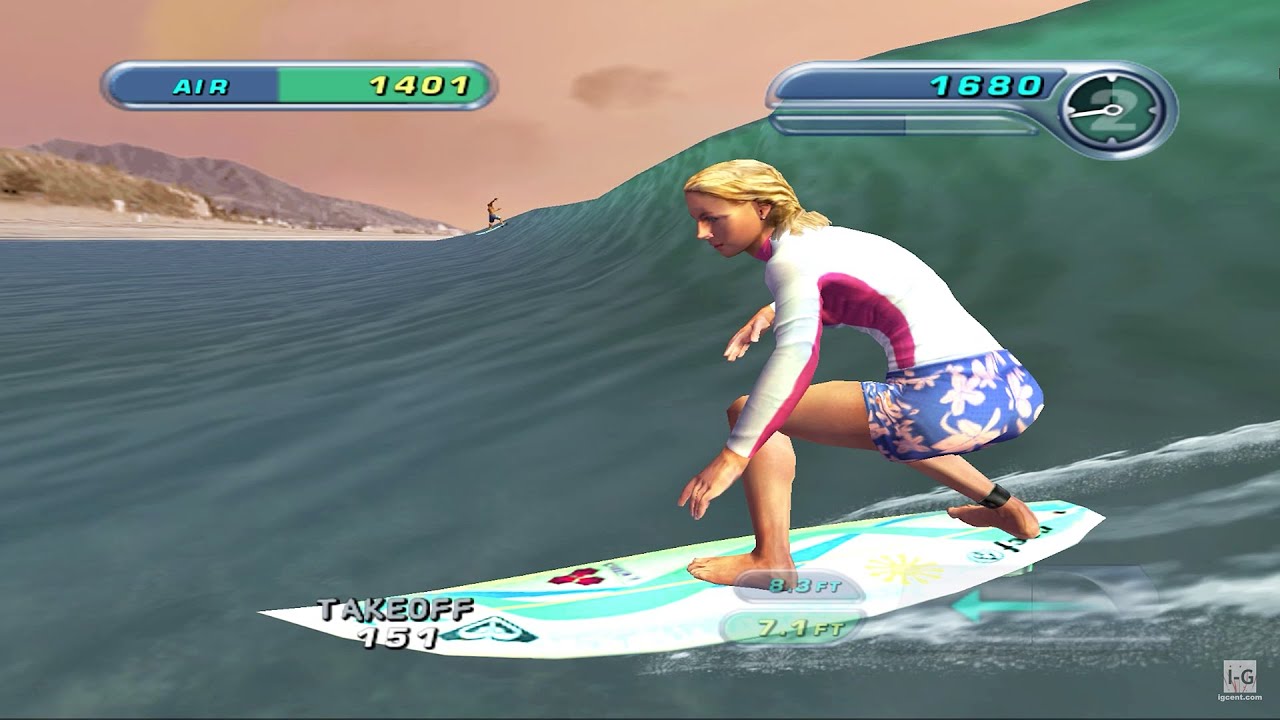
(Screenshot from igcompany’s video “Kelly Slater's Pro Surfer - PS2 Gameplay.”)
So, the interest in the project started from a simple idea: what would a surfing game look like if it tried to represent the sport more faithfully? That question eventually led to the wave system behind Swell.
So How Do Real Waves Break?
In real surfing conditions, the way a wave breaks is strongly influenced by the shape of the ocean floor near the shore, a concept known as bathymetry.
As a wave moves toward land, the water beneath it becomes shallower. This causes the wave to slow down and grow taller, a process called shoaling. Once the wave reaches a certain height relative to the water depth, it begins to break.
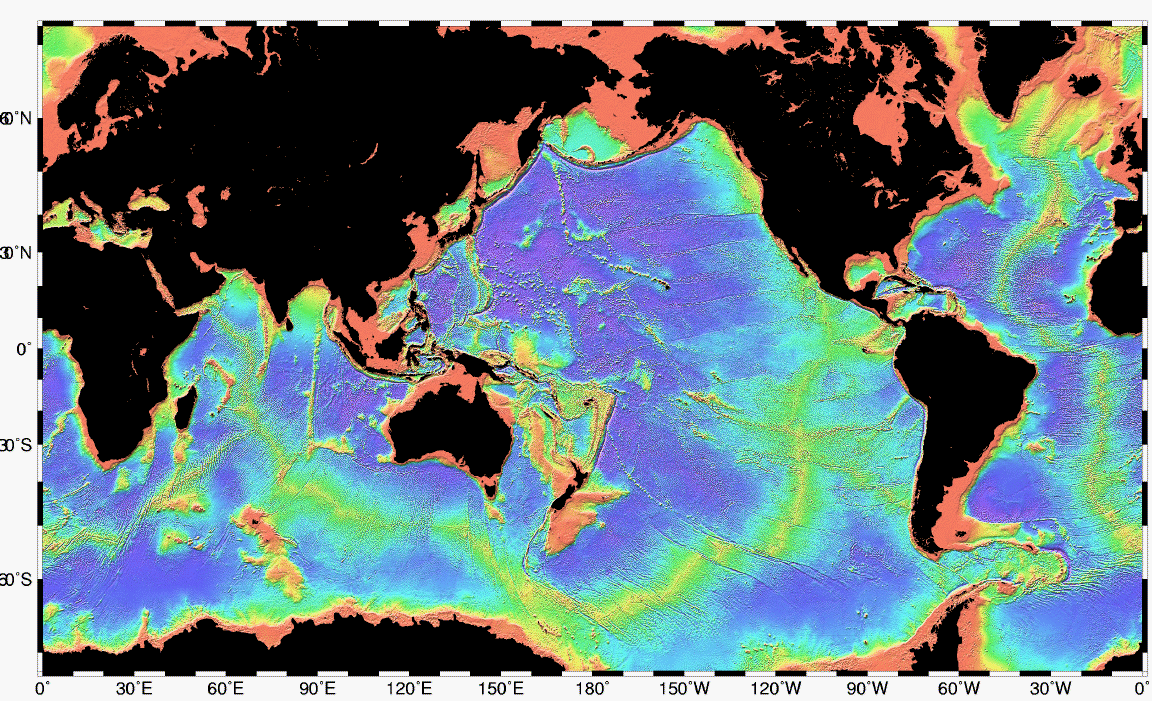
(Bathymetry map by the National Oceanic and Atmospheric Administration (NOAA), via Wikipedia.)
Small variations in the seabed can dramatically change how that happens. If the ocean floor slopes gradually from one side to the other, the wave might start breaking on one side first and continue along the face of the wave. Surfers often refer to these as "lefts" or "rights," depending on the direction the wave peels.
Other conditions produce closeouts, where the entire wave breaks at once, or A-frame waves, where the break travels in both directions from a central peak.
Other conditions produce closeouts, where the entire wave breaks at once, or A-frame waves, where the break travels in both directions from a central peak.
Using Depthmaps to Shape the Waves
The system in Swell uses a concept similar to terrain heightmaps. Instead of representing elevation, however, the texture represents ocean depth.
FinSaltSwell described this as a depthmap, where the red channel stores bathymetry values. In this case, the texture works much like a heightmap would: lower values represent shallower areas, while higher values represent deeper water.
As waves travel through the scene, the system samples this depthmap. The bathymetry information determines which parts of the wave begin increasing in height as they approach shallower regions.
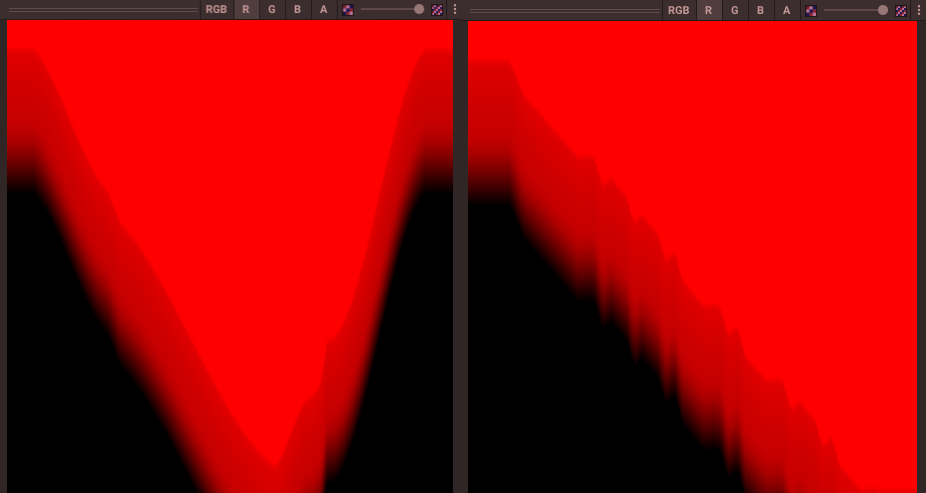
Once a certain height threshold is reached, the wave begins to break.
Because the depthmap defines how depth changes across the seabed, adjusting the texture changes the breaking profile of the wave. A slope running diagonally across the texture can produce a wave that peels from one side to the other. Different shapes can produce closeouts or waves that break in multiple sections.
In practice, these textures define how the wave breaks across the shoreline.
Early Prototypes
The first versions of the system looked quite different from the current implementation.
FinSaltSwell mentioned that Swell started as a 2.5D experiment, partly because it was their first time ever working on a full 3D project. The early waves were represented by planes rotated ninety degrees, already driven by the depthmap approach described earlier.
Later builds moved toward a more complete 3D implementation as the project evolved. Even at that stage, the same bathymetry-driven system remained central to wave formation and breaking.
Are you interested in seeing more from FinSaltSwell? For now, their Reddit profile is the main place where they share updates about the project, check it out:
Interested in learning more?
If you’re working with Unity 6, the Unity 6 Creator Essentials Bundle brings together two books focused on editor tools and character customization.
It includes Unity 6 Editor Tools Essentials and Mastering Character Customization in Unity, and it is aimed at developers and artists interested in building custom tools and more flexible character systems for their projects.
Working with Unity 6? 🛠️ We’ve put together a bundle with two books on editor tools and character customization, available this week at a lower price.
— Jettelly Inc. (@jettelly) March 30, 2026
See it here: https://t.co/ILY3AtWmD4 🏷️#unity3d #gamedev #indiedev pic.twitter.com/TQu9F1HMZg
Jettelly wishes you success in your professional career!
Did you find an error? No worries!
Write to us at [email protected], and we'll fix it!
Level up your Unity skills with Character Customization and Editor Tools!
We invite you to explore "Unity 6 Creator Essentials Bundle", a comprehensive bundle on the concepts and fundamentals seen in this post.
Other posts that might interest you.
-
 Anvil CSG lets you shape levels in a four-view editor and build them into Unity maps. Simun Dev shares how feedback from beta testers helped the tool grow.
 -
 Johann Hotzel built a free Unity library that cuts holes into meshes while a game is running. In his demo, the collider changes too, so shots can pass through.
 -
 Silk & Sorrow's trees and trash piles seem to have height, but they are made from sprites. Florian Heynen of Snowberry Games made the effect by stacking, moving and lighting those layers in Godot.
