
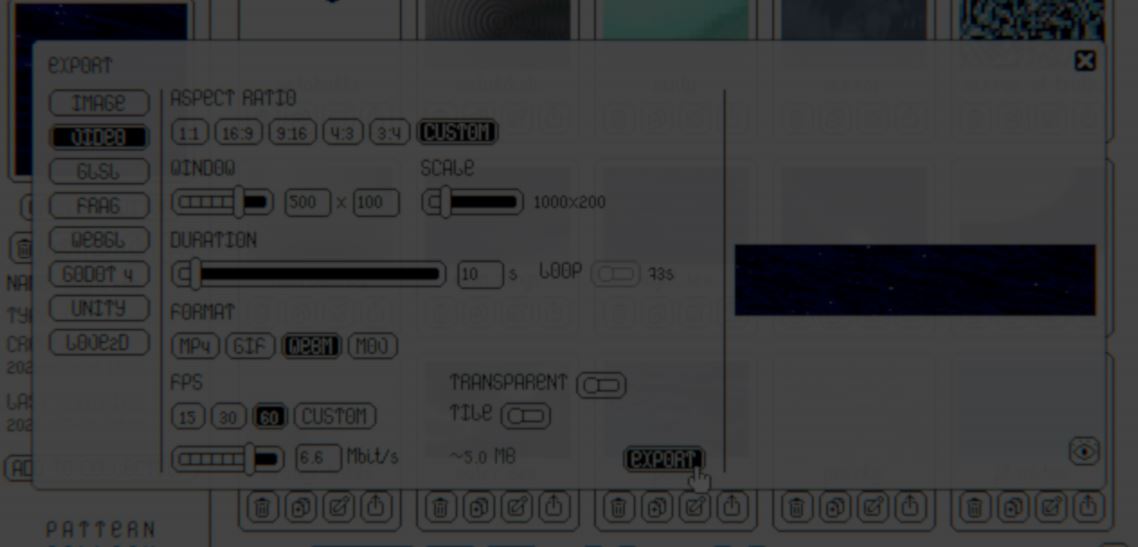
Anastasiia (lotritsa) began building Kaleidos to create pixel shader patterns for her text-based RPG, Emerald Ferns. It became a standalone app from Lotritsa Studio, the two-person team she runs with her husband, Yevhen.
Working with LÖVE and GLSL meant repeatedly changing values in code, compiling and checking the result. Her first improvement was an interactive palette for adjusting how noise values mapped to colors in real time. Sliders for basic noise parameters followed.
Anastasiia gave the prototype its own fonts and buttons early, wanting it to feel pleasant to use even as a personal tool. After she shared a recording online, a comment asking for its name prompted her to develop it into an app.
Kaleidos now offers Perlin noise, cellular noise and reaction diffusion, with controls for parameters, palettes, warping, animation and interaction.
Her master’s thesis on procedural terrain noise helped her choose which functions and parameters to expose. She also spent time tuning defaults and permitted ranges to produce useful starting points for experimentation.
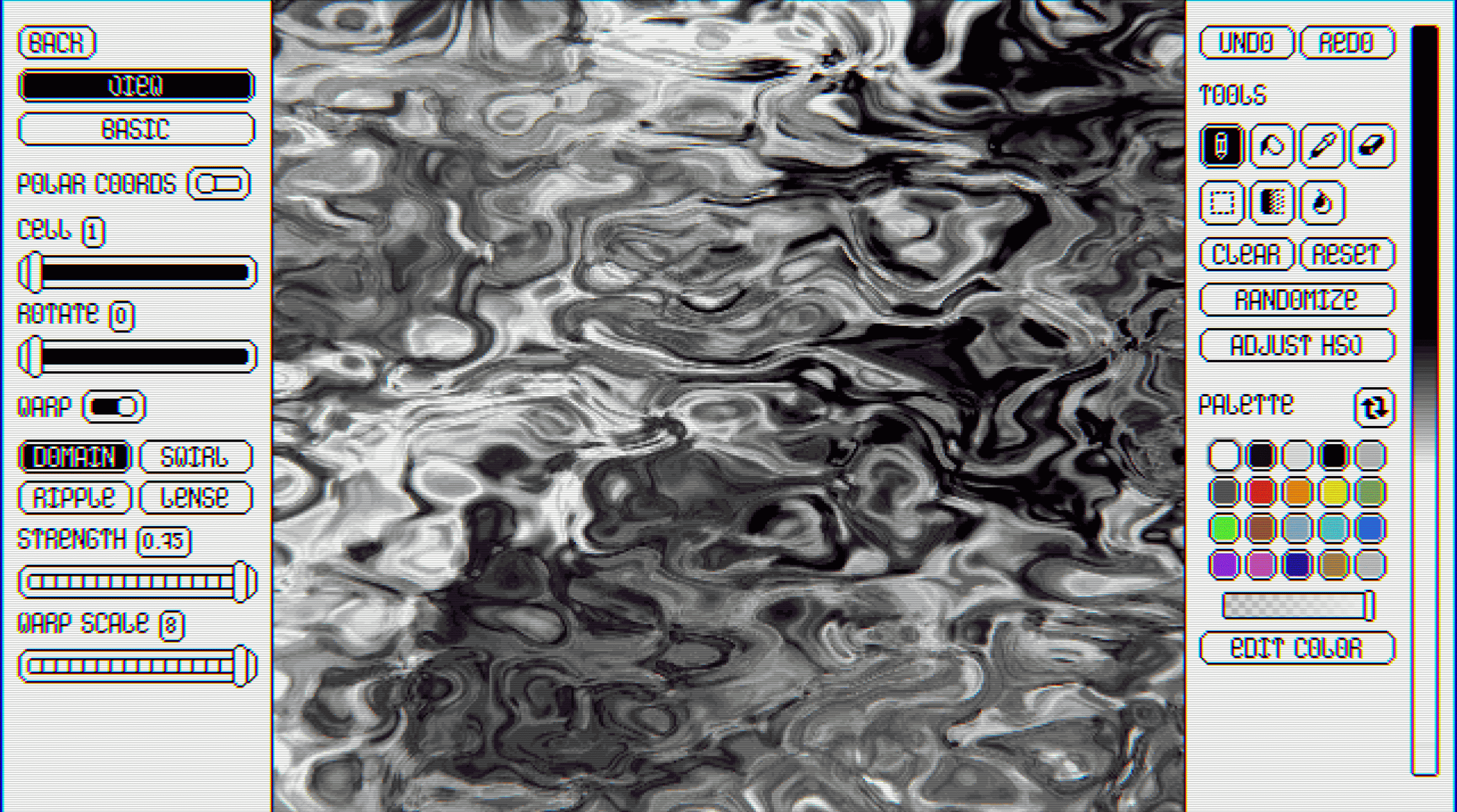
Each mode uses a large GLSL shader that supports its parameter combinations. Adjusting the controls changes the values sent to that shader each frame.
Yevhen handled the exports while Anastasiia worked on reaction diffusion. Shader exports remove unused code, hardcode the selected values and adapt the syntax to formats used by engines such as Unity and Godot.
For images and videos, Kaleidos renders the pattern again at the requested resolution, then uses FFmpeg to produce the output.
Looping Perlin and cellular animations use periodic sampling and adjusted speeds to complete a full noise cycle. Tile exports apply wrapping in space, with small scale adjustments to fit whole noise cells across the frame.
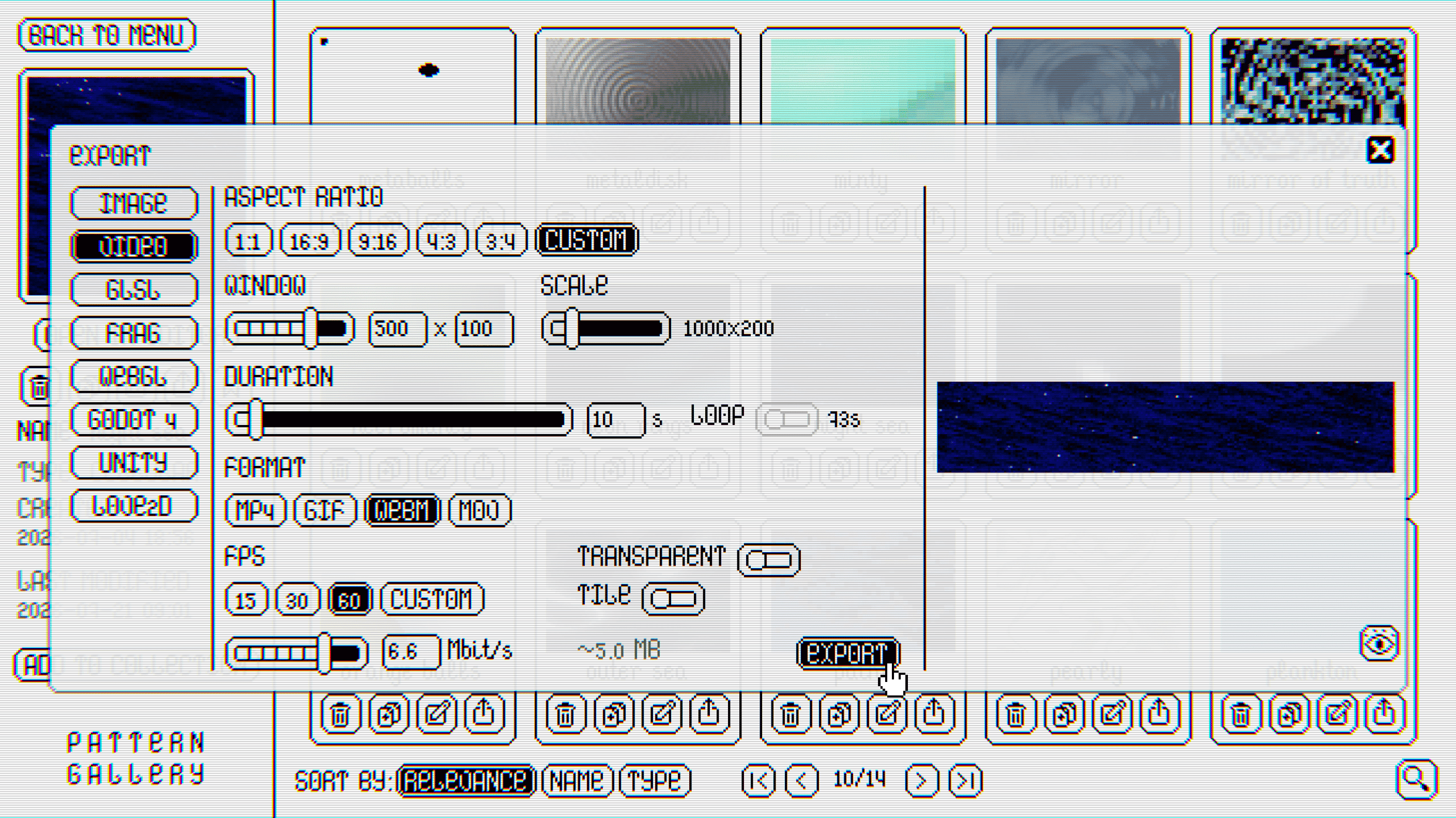
Reaction diffusion needs information from the previous frame to generate the next, which complicates exports. The team is still expanding its export options for that mode. Unreal Engine and GameMaker exports are also planned for Kaleidos.
Want to learn Godot VFX? ✨
We just released our new Godot All About VFX Bundle, it covers shaders, particles, and VFX for 2D, UI, and 3D games with step-by-step examples. Over 600 pages of content!
We now have a new bundle: Godot: All About VFX! ✨
— Shaders Bible Series (@ushadersbible) September 21, 2026
It includes the Complete Godot VFX Handbook and the Godot Shaders Bible! ➡️ https://t.co/aBEtLP7VPP#indiedev #godot pic.twitter.com/7STucAvnN3
Jettelly wishes you success in your professional career!
Did you find an error? No worries!
Write to us at [email protected], and we'll fix it!

Level up your game's VFX in Godot.
We invite you to explore "The Godot All About VFX Bundle", a comprehensive bundle on the concepts and fundamentals seen in this post.
Other posts that might interest you.
-
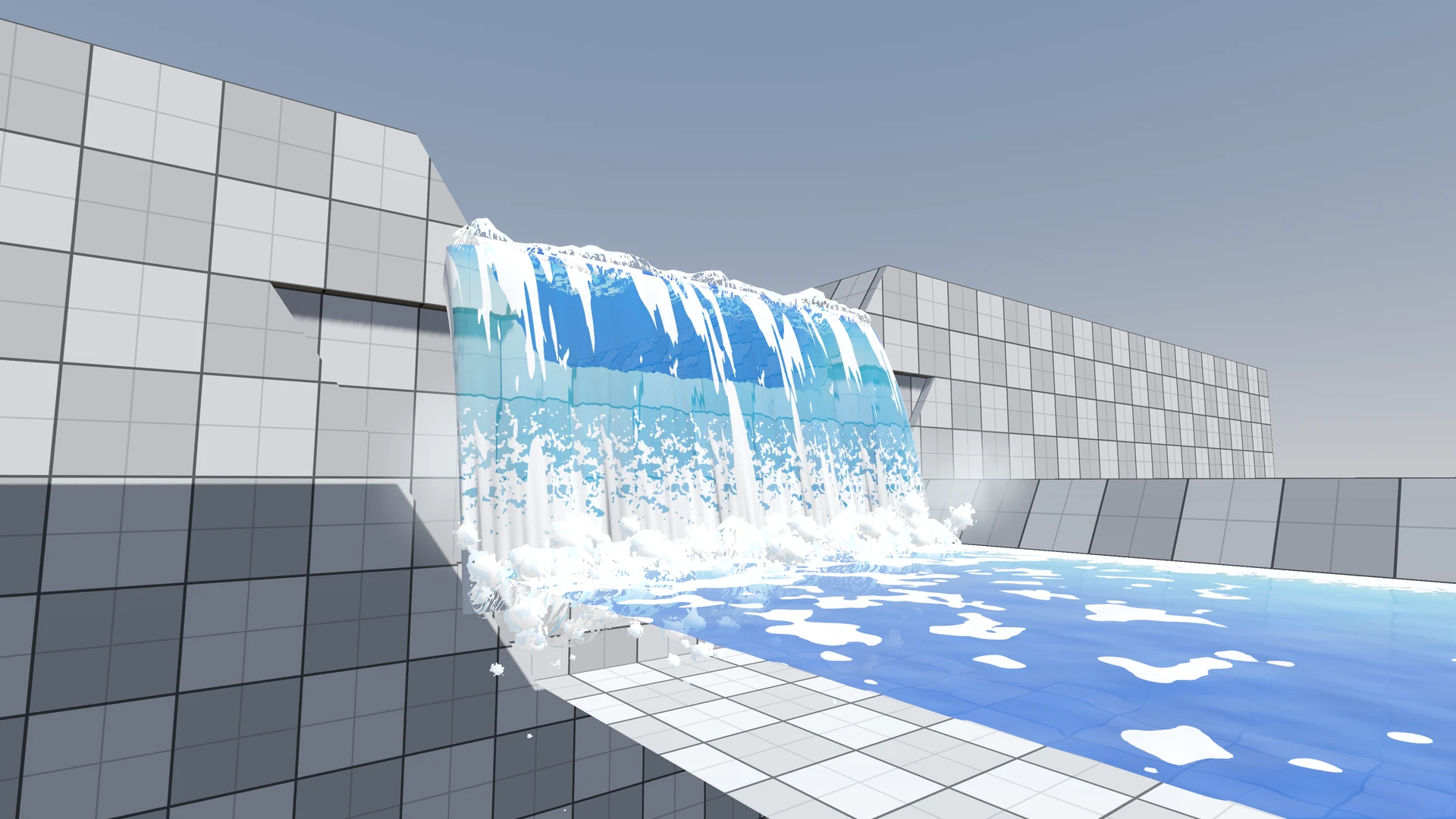 The river in Windup Wonderland looked clear, but its foam kept repeating and the waterfall felt flat. After feedback on Reddit, zhan reworked both in Godot.
 -
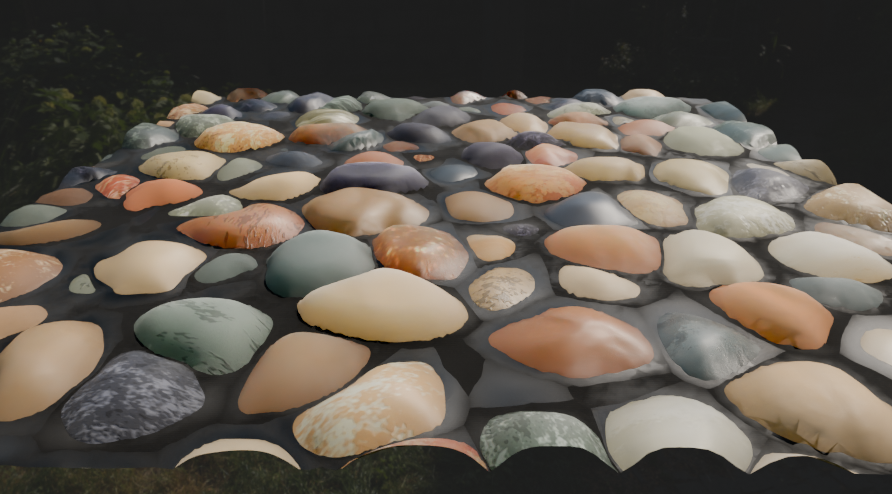 Nompen photographed a pebblecrete walkway and recreated it in Blender. The tricky part was making the stones’ colors and markings vary without obvious repetition.
 -
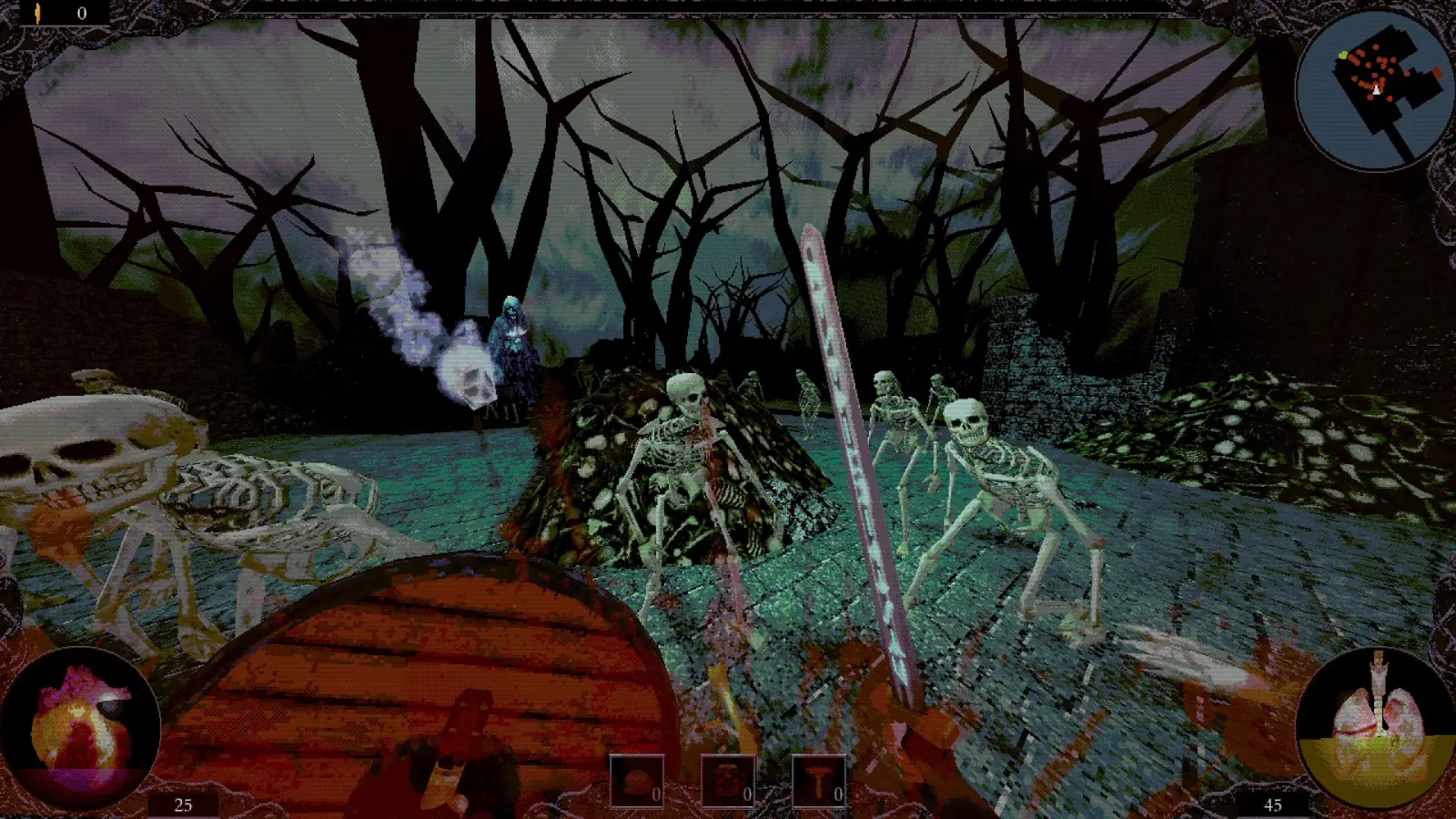 In ALLFATHER, enemies move and attack on a shared clock while the player fights in real time. Tommy McKay explains why he rebuilt their navigation around a grid.
